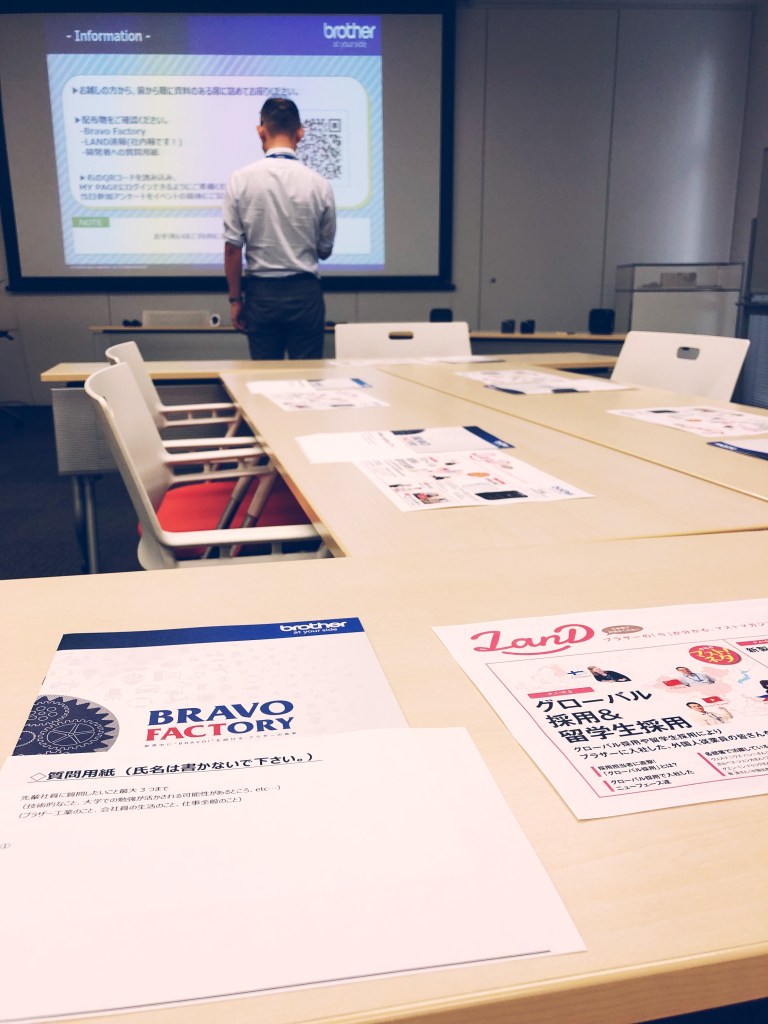
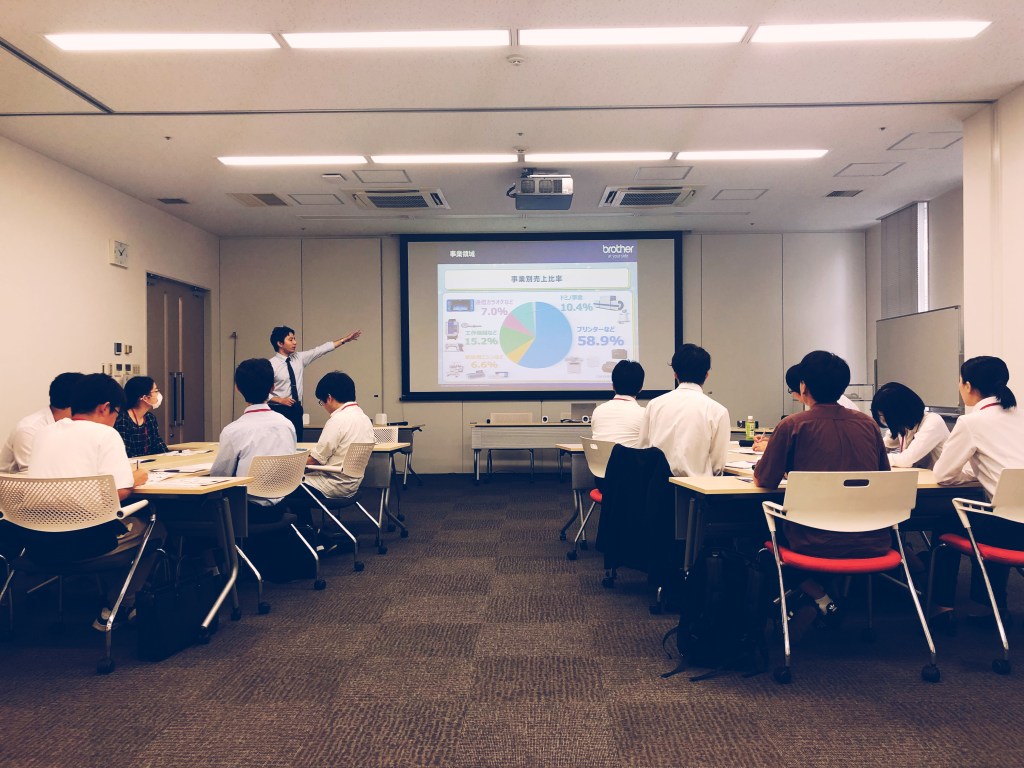
I haven’t written lately – apologies: it’s been quite busy at the office. For the last few weeks, I’ve been working with the C&C (CSR & Communications) Department: learning about our efforts regarding the Global Brother Brand, participating in their work and activities, and discussing how to improve alignment with the US. My last day with them was yesterday, and after a successful final presentation, I am treating myself to some 7/11 soft-serve ice cream. Outside, Typhoon Hagibis is underway, so all the trains, stores, and restaurants are shut down. It’s the first time they’ve closed Tokyo Disneyland for a weather-related incident since 1958. The Nagoya area doesn’t seem to be in much danger, but to be safe – I’m spending the day inside.
In the meantime, let me Fil You In on a recent trip I took to Osaka.
Checking In
As the third-largest city in the country and only 50 minutes from Nagoya by train, Osaka is known for its laid-back attitude and good eats. Its slogan is kuidaore, which basically means “Eat Until You Go Bankrupt,” and as a Japanese-food lover, I was super excited to visit. They even have a clown mascot named after the phrase, and yes – he’s creepy.
Even just stepping off the train, I could feel that the energy in the city was far different than Tokyo. People are friendlier, brighter, and filled with more laughter. The streets are colorful and distinctly animated, decorated in eye-catching streetwear shops, bustling food vendors, and izakaya pubs. Just walking around fills me with excitement – I can’t wait to see this place lit up at night.
The first thing I do is check into my hotel “room” – well, actually my pod. Tonight, I’ll be staying at the 9h nine hours Namba capsule hotel, a hotel-style famous in Japan and a budget-friendly alternative for tourists, travelers, or anyone who partied too late and missed the last train.
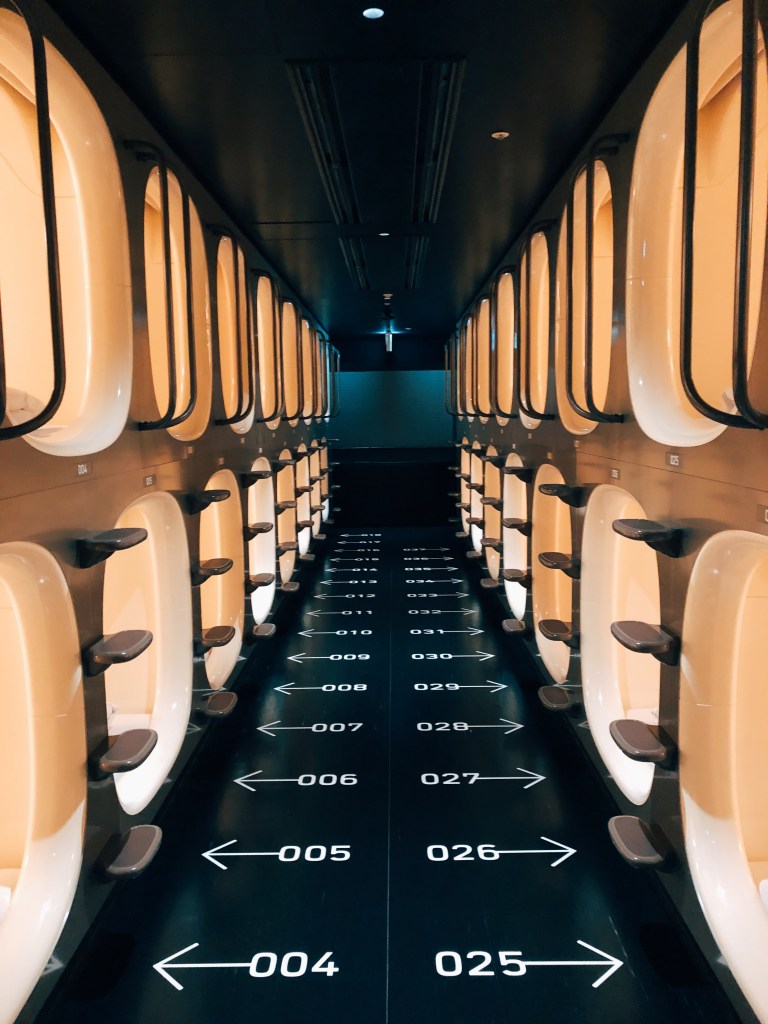
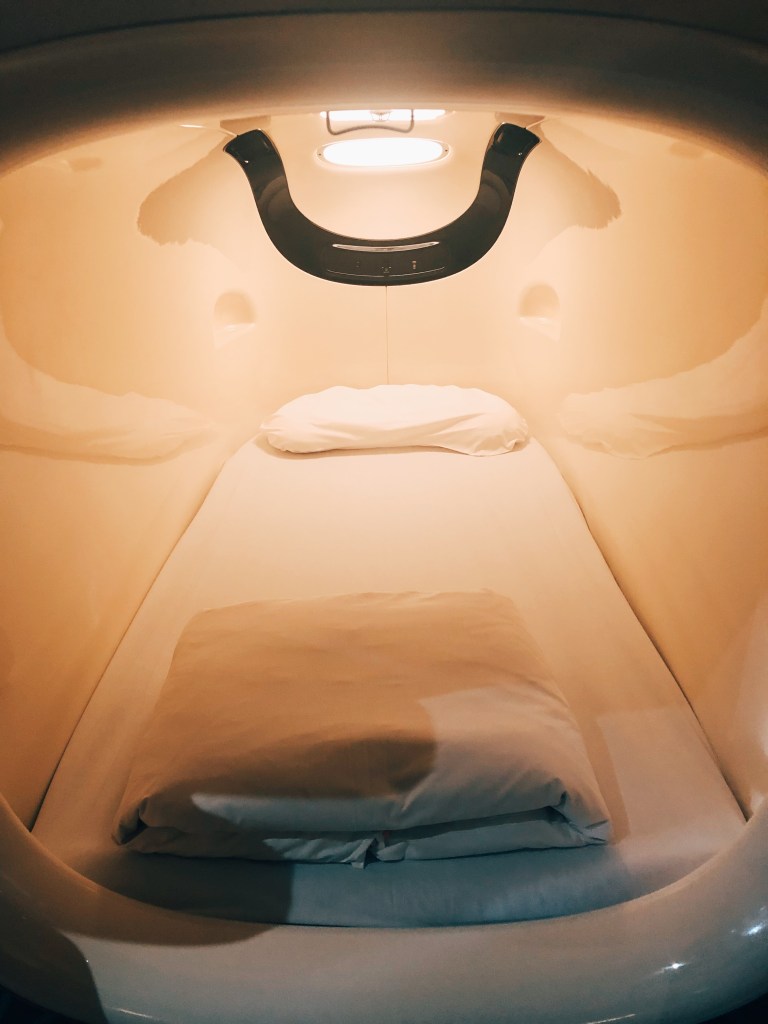
Okay – it’s really not as bad as it looks. For roughly $25 a night (on a Saturday!), the place is extremely clean, comfortable, and I slept like a baby. There is a privacy screen, but it’s not a door – I’m guessing there needs to be some airflow so the capsule doesn’t turn into a coffin. This might turn you away if you’re concerned about safety – though in my experience the people of Japan are generally not rule-breakers, and the pod rooms are locked and gender-segregated. They provide you with a locker, shared bathroom/showers, and basic amenities: towels, slippers, disposable toothbrush/toothpaste, and even an adorable pair of pajamas so that you can match with all the other capsule-people. Yes, I tried them – and yes, they were comfy. The place is incredibly futuristic-looking – each person gets a little card with a QR code on it, which is used to scan into the sleeping room, the locker, and the bathroom. Overall, I really liked it and would recommend it for anyone who plans on spending very little time at the hotel, and most of their time sightseeing.
Night on the Town
After orienting myself with my science-fiction sleeping space, I hit the streets. Lucky for me, I’m just a few blocks from the heart of the city: Dotombori Street, an overflowing cultural hub surrounding a 400-year old canal – a really neat mixture of old and new.
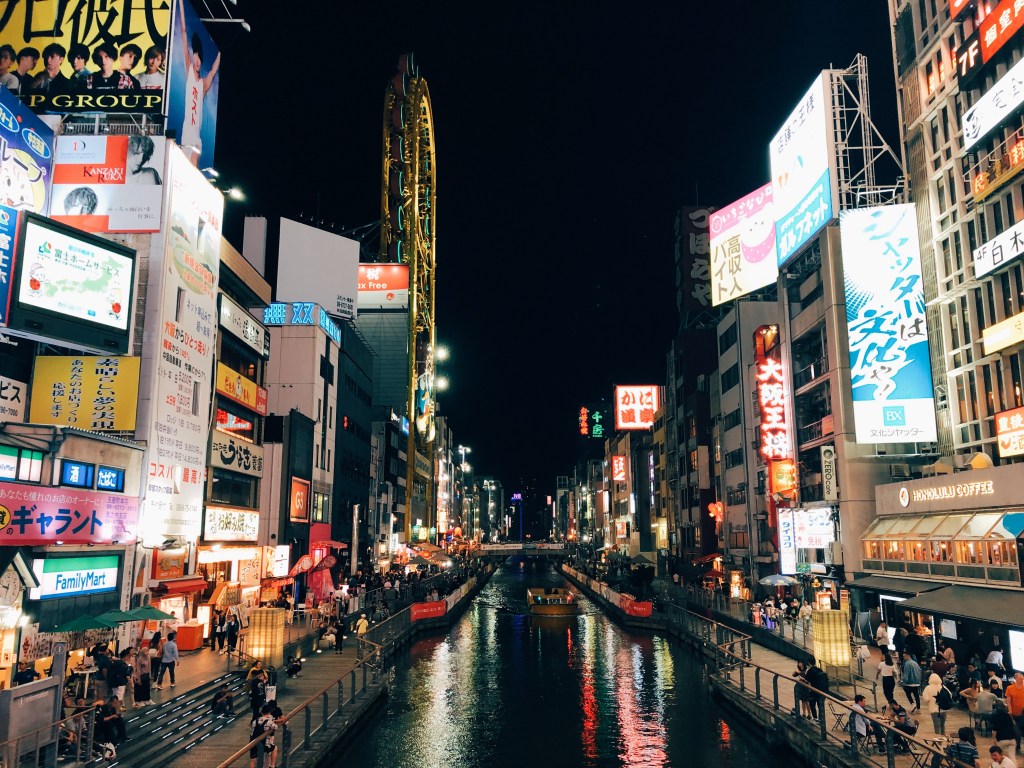
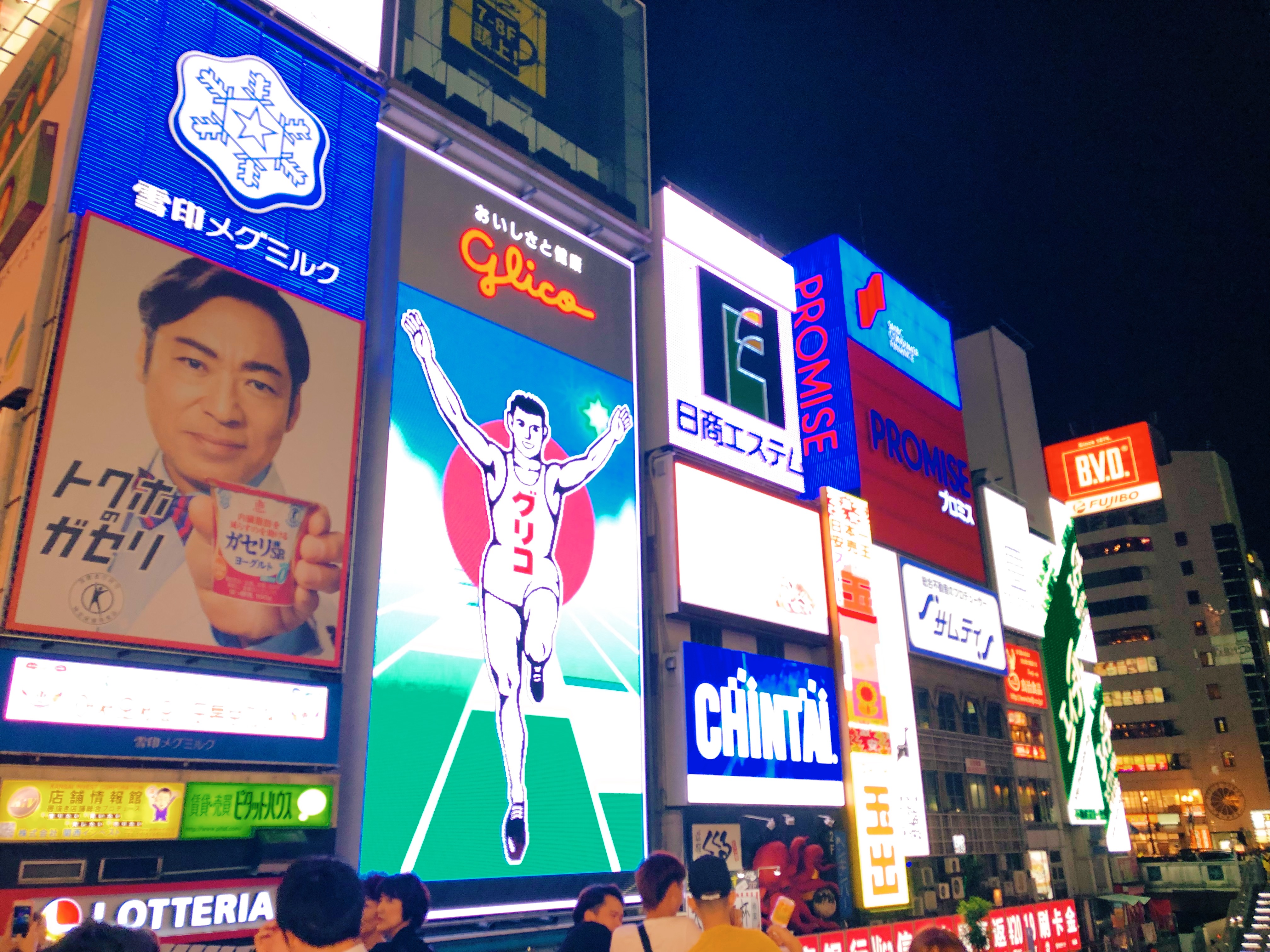
I stay on this promenade for quite some time, just meandering in and out of the different shops and taking in the view. There’s a rugby match this weekend, so every few minutes I can hear the BOOM of excitement and applause from a nearby sports pub. There are so many tourists here for the games, especially from England & Ireland, so I manage to blend in fairly easily. Not far from the main canal is the iconic Glico Running Man sign, one of the most recognizable sights of Osaka, advertising a well-known Japanese confectionery company headquartered in this city. They make many products, one of the most famous being Pocky – chocolate-coated biscuit sticks.
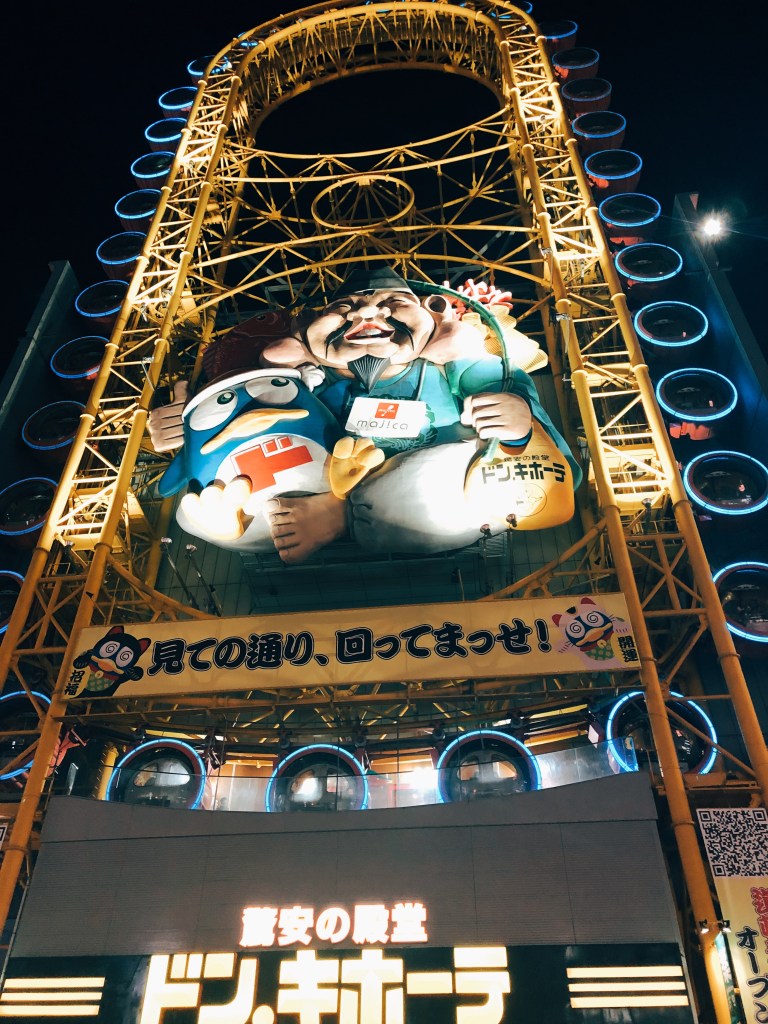
With a city as big as Osaka, it’s natural there’s a Don Quijote store nearby. These are a modern symbol of Japan: completely overwhelming multi-story buildings with millions of discount products tucked inside. I mean, they have everything you can image: candy, food, liquor, household items, electronics, clothing, souvenirs, costumes, manga, appliances, bath products, every flavor of Kit Kat – you name it – all for relatively cheap prices. I’ve done some shopping at the one in Nagoya, but I can only take about 20-30 minutes before my hands start to shake and the fight-or-flight syndrome kicks in. The aisles are narrow, unrealistically stocked from floor to ceiling, and completely swamped with people. Imagine taking an entire section of a department store and shoving it into a living room, then multiplying that by 100. It’s somewhat of a labyrinth, too, and easy to get lost in. I would not recommend it to anyone with claustrophobia. The one in Osaka, however, is particularly immense, with a gigantic Ferris Wheel operating around the perimeter building. I go in briefly but don’t buy anything as the line wraps around the whole first level of the store. However, I do take a ride on the Ferris Wheel – to take in the view from a different angle.
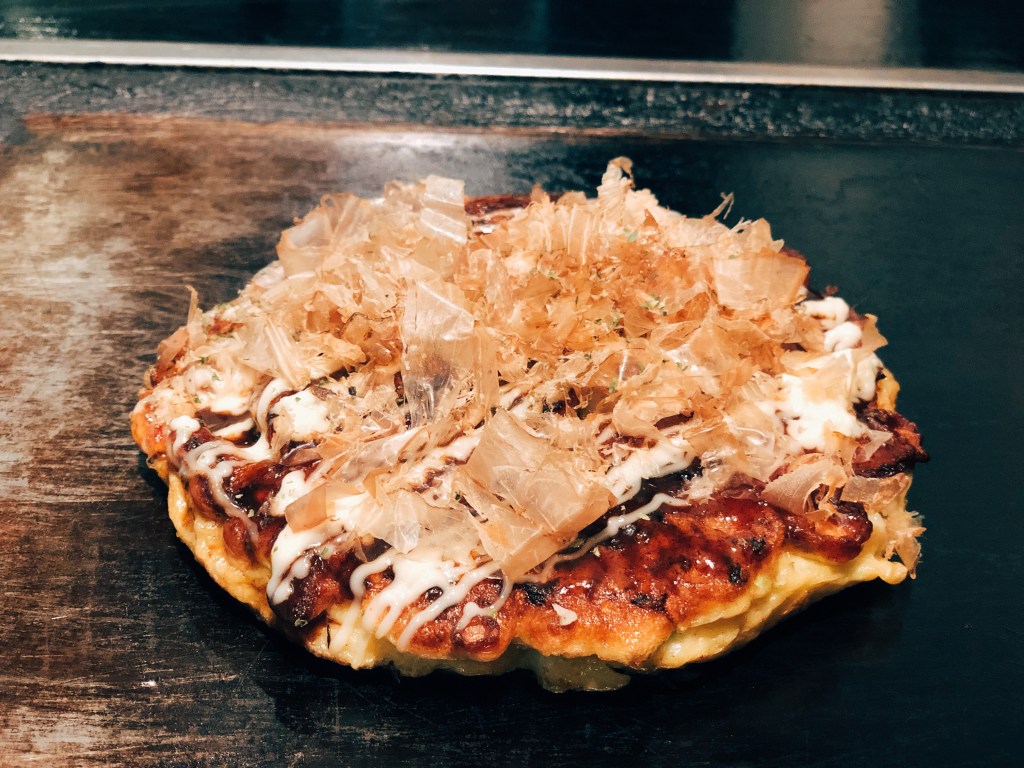
I have a big day tomorrow, as I will spend the day in the nearby town of Nara, ancient capital of Japan (before Kyoto, even), and home to beautiful temples as well as hundreds of deer roaming amidst the people. But, before I go back to my capsule, there’s one thing I need to do: try one of Osaka’s famous cuisines: okonomiyaki (meaning: “what you like”), a savory pancake topped with vegetables, scallions, egg, seafood, and various sauces. It’s usually cooked in front of you and then served on a hot skillet that keeps it warm as you eat it, and I’ve got to say – it’s probably my favorite Japanese food that I’ve tried so far. There are many different ways to get it, depending on taste – the Hiroshima version features noodles, the Osaka version comes without. But naturally, when in Osaka…
As I get ready to turn in, I stop by Amerika-mura, a super-hip urban area with a miniature replica of the Statue of Liberty, and watch people at Triangle Park play music, dance, and just have fun with their friends. For them, it seems like the night will never end, and part of me misses everyone back home. Nearby, slanted graffiti reads “Would u kill 4 peace?” Hm. Nothing like some political food-for-thought to end the night.
The Next Morning
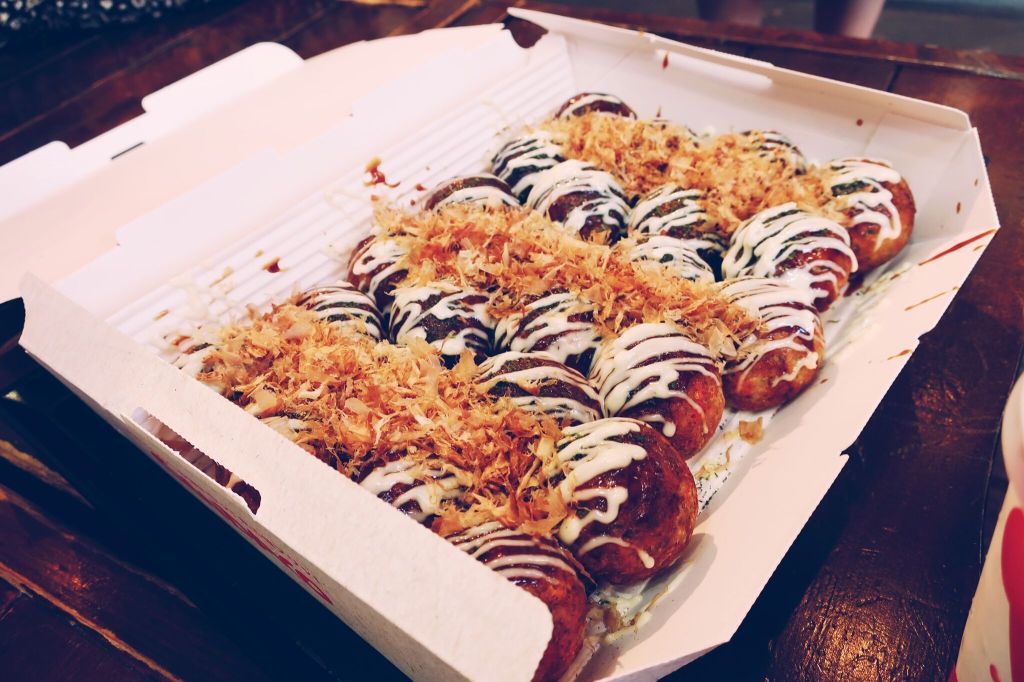
Before heading to Nara, I make a quick stop back at Dotonbori to experience the daytime. It’s far more quiet – people are probably still recovering from last night – but you can start to feel the bustle as it slowly begins to churn. It’s amazing to see a sleepy city come to life. For a quick snack, I try Osaka’s other famous staple: takoyaki – fried octopus balls. I swear it’s far more delicious than how it sounds. I get it at one of the famous shops, while the line is still short. It even has its own theme song: a takoyaki ballad set to classical orchestral music – hilarious!
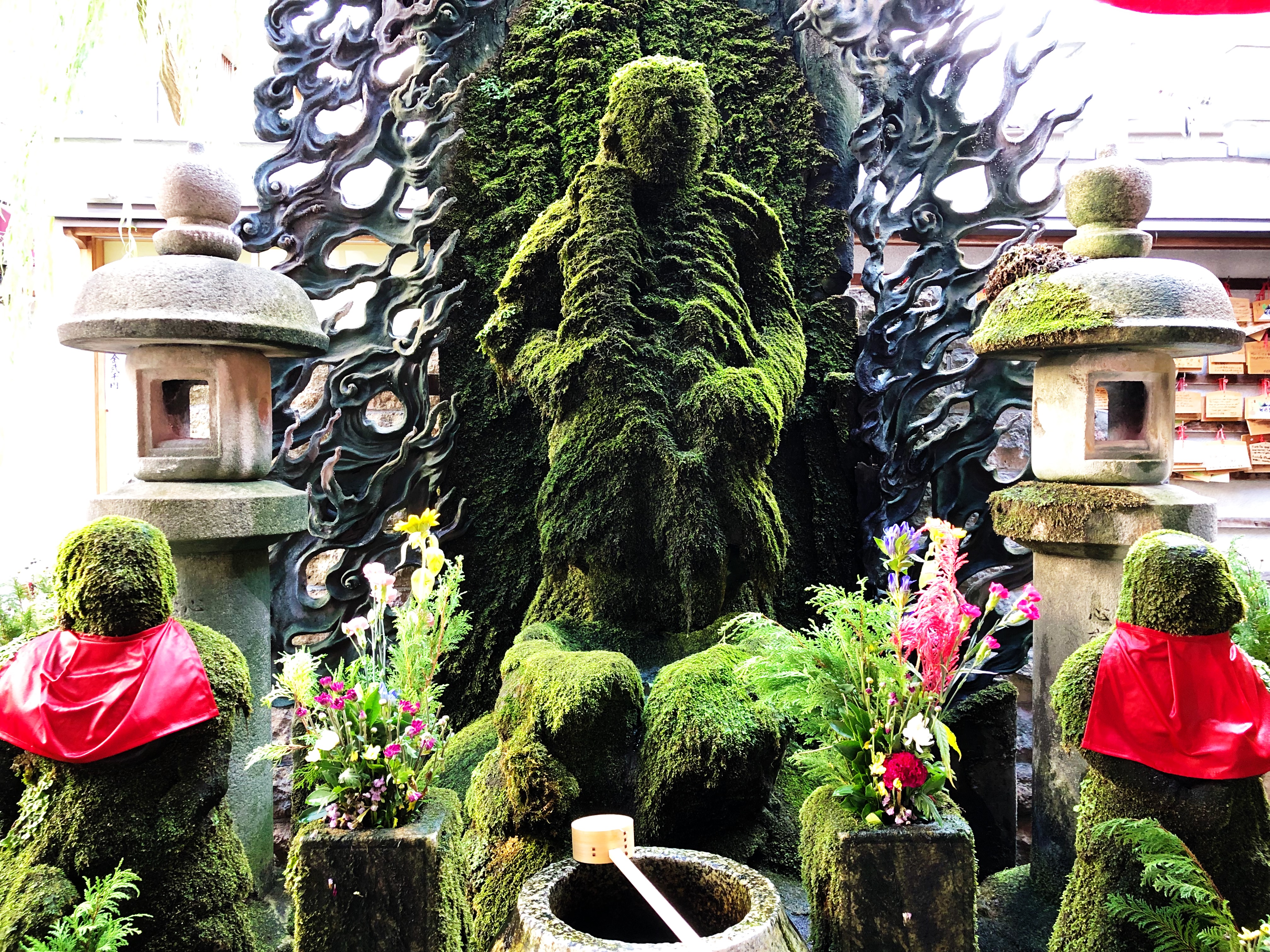
After the meal, I take my time to meander among the different shops of Shinsaibashi, admiring how the city manages to fit so much stuff in such little space, and making a quick stop to pick up some souvenirs. By now, I’ve learned to communicate pretty well within stores – but when in doubt, a warm smile and hand gestures go a long way. Just as I am about to turn back to the train station, I stumble upon the cozy Hozenji Temple, tucked away in an alley just off the main shopping strip. That’s one of my favorite parts of Japan, I think: the juxtaposition of the ancient and the modern. You can find temples and shrines everywhere, oftentimes right next to skyscrapers, and usually very tiny. This one features a statue completely covered in moss. I can’t even begin to fathom how old it probably is, but I take a moment to respect the serenity and the people that I’m sure work very hard to take care of it.
I loved Osaka, even though my time here was short. Next stop: Nara – I’ll be sharing some of that magic in a separate post.
Until Next Time,
Fil
Phrase of the Day:
お腹が空きました! (Onaka ga sukimashita!)
Translation: I’m hungry!

 Fil You In